Controle biológico de Meloidogyne incognita (Kofoid & White) Chitwood, mediante a aplicação de agentes de controle biológico
Resumo
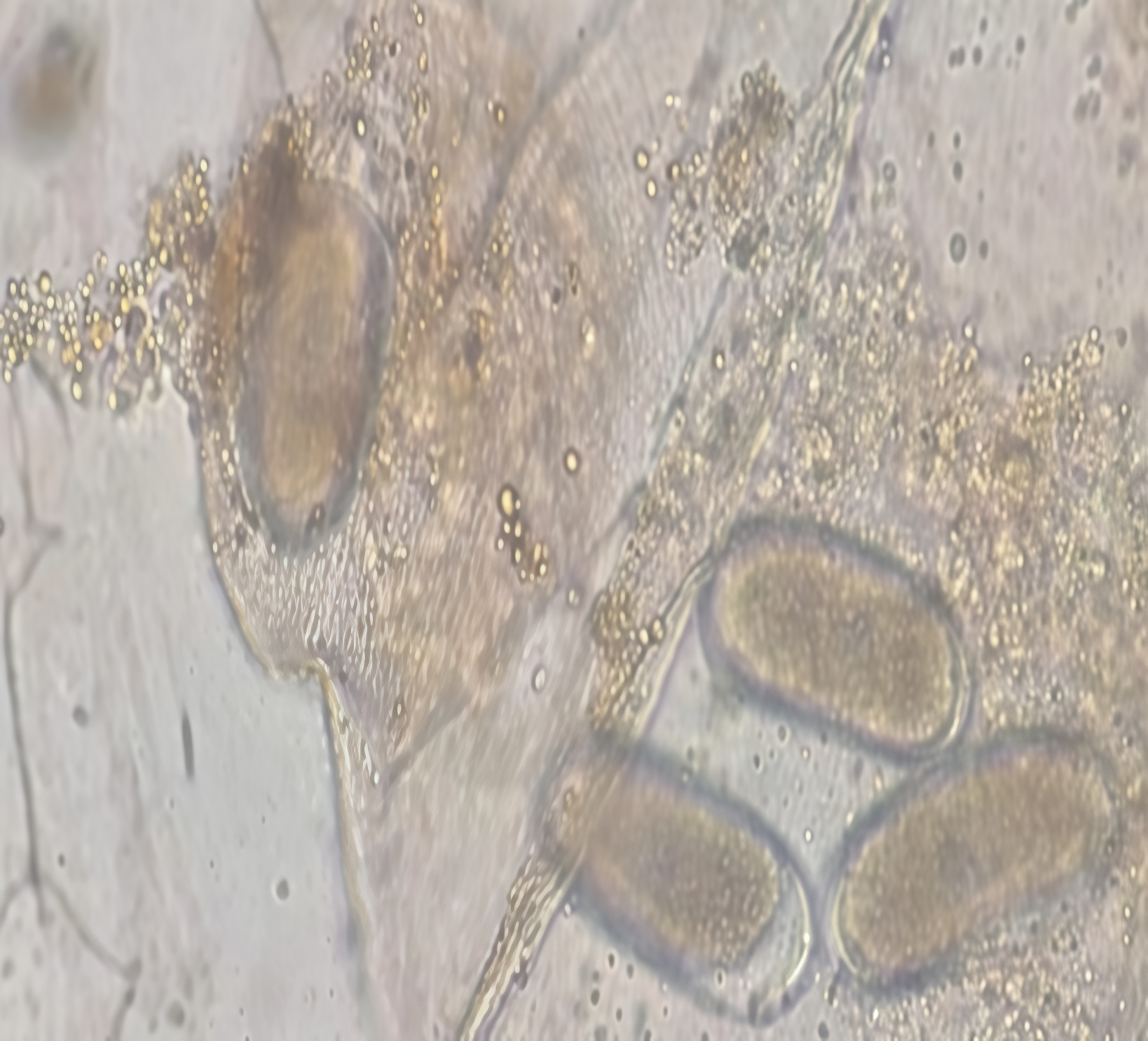
O objetivo da pesquisa foi determinar o potencial de cepas de Trichoderma spp., Isaria fumosorosea e Isaria javanica como agentes de biocontrole sobre Meloidogyne incognita (Kofoid e White) Chitwood, proveniente de tomate cv. Saladette (Solanum lycopersicum L.). Foram utilizadas cepas de T. harzianum, T. viride, T. koningii, T. asperellum e um isolado de Trichoderma sp., I. fumosorosea e I. javanica, previamente selecionadas por sua alta capacidade parasítica, antibiose e adaptação a diversas condições ambientais e substratos. Nos ensaios in vitro, foi avaliado o parasitismo dos agentes de controle biológico (um filtrado puro de cada uma das cepas) sobre ovos, massas de ovos e juvenis (J2) de M. incognita. As avaliações foram realizadas com microscópio óptico com objetiva de 40X, aos 10 dias e 72 horas, respectivamente. O controle do nematoide em condições semicontruladas foi realizado na área experimental utilizando sacos de polietileno com capacidade de 10 kg, inoculados com aproximadamente 5.000 juvenis (J2) e transplantados com mudas de tomate. Sete dias após a inoculação do nematoide, os agentes biológicos foram aplicados ao solo; 45 dias depois foram avaliadas as variáveis de incidência e severidade. Com base nos resultados obtidos, verificou-se que as cepas de T. harzianum, T. asperellum, T. koningii e I. fumosorosea foram eficientes no controle de M. incognita em diferentes estágios do seu ciclo biológico.
Downloads
Referências
Ali, Q., Yu, C., Wang, Y., Sheng, T., Zhao, X., Wu, X., Jing, L., Gu, Q., Wu, H., & Gao, X. (2023). High killing rate of nematode and promotion of rice growth by synthetic volatiles from Bacillus strains due to enhanced oxidative stress response. Physiologia Plantarum, 175(1), e13868. https://doi.org/10.1111/ppl.13868
Ayaz, M., Zhao, J.T., Zhao, W., Chi, Y.K., Ali, Q., Ali, F., Khan, A.R., Yu, Q., Yu, J.W., Wu, W.C., Qi, R.D., & Huang, W.K. (2024). Biocontrol of plant parasitic nematodes by bacteria and fungi: A multi-omics approach for the exploration of novel nematicides in sustainable agriculture. Frontiers in Microbiology, 15, 1433716. https://doi.org/10.3389/fmicb.2024.1433716
Benedetti, T., Huzar-Novakowiski, J., Sordi, E., Carvalho, I.R., & Bortoluzzi, E.C. (2021). Microorganisms in the biological control of root-knot nematode: A meta-analytical study. Society and Development, 10(6), e39310615209. https://doi.org/10.33448/rsd-v10i6.15209
Benítez, T., Rincón, A.M., Limón, M.C., & Codón, A.C. (2004). Biocontrol mechanisms of Trichoderma strains. International Microbiology, 7(4), 249-260. https://scielo.isciii.es/pdf/im/v7n4/Benitez.pdf
Blanco Villacorta, M.W., Cadena Miranda, F.A., Challco Challco, G.J., & Lopez Loza, G. (2024). Efecto de Paecilomyces y Trichoderma spp. en el control biológico de nematodos en el cultivo de tomate (Solanum lycopersicum), en la Estación Experimental Patacamaya. Apthapi, 10(3), 2758-2766. https://doi.org/10.53287/pgiv2172jk63w
Calderón-Urrea, A., Vanholme, B., Vangestel, S., Kane, S.M., Bahaji, A., & Gheysen, G. (2016). Early development of the root-knot nematode Meloidogyne incognita. BMC Developmental Biology, 16, 10. https://doi.org/10.1186/s12861-016-0109-x
Di Rienzo, J. A., Casanoves, F., Balzarini, M. G., González, L., Tablada, M., & Robledo, C. W. (2017). InfoStat Profesional versión 2.1 [Software]. Grupo InfoStat. https://repositorio.catie.ac.cr/handle/11554/10346
Druzhinina, I.S., Seidl-Seiboth, V., Herrera-Estrella, A., Horwitz, B.A., Kenerley, C.M., Monte, E., Mukherjee, P.K., Zeilinger, S., Grigoriev, I.V., & Kubicek, C.P. (2011). Trichoderma: The genomics of opportunistic success. Nature Reviews Microbiology, 9(10), 749-759. https://doi.org/10.1038/nrmicro2637
Eisenback, J.D., Hirschmann, H., Sasser, J.N., & Triantaphyllou, A.C. (1981). A guide to the four most common species of root-knot nematodes (Meloidogyne spp.). North Carolina State University Graphics.
Harman, G.E. (2024). Integrated benefits to agriculture with Trichoderma and other endophytic or root-associated microbes. Microorganisms, 12(7), 1409. https://doi.org/10.3390/microorganisms12071409
Herrera-Parra, E., Ramos-Zapata, J., Cristóbal-Alejo, J., Tun-Suárez, J., & Reyes-Ramírez, A. (2018). Species of Trichoderma antagonistic to the root-knot nematode (Meloidogyne incognita) in habanera pepper. Phyton, 87, 7-13. https://www.revistaphyton.fund-romuloraggio.org.ar/vol87/v87a01_Herrera-Parra.pdf
Hooper, D.J., Hallmann, J., & Subbotin, S.A. (2005). Methods for extraction, processing and detection of plant and soil nematodes. In M. Luc, R.A. Sikora, & J. Bridge (Eds.), Plant Parasitic Nematodes in Subtropical and Tropical Agriculture (pp. 53-86). CABI. https://doi.org/10.1079/9780851997278.0053
Hussey, R.S., & Barker, K.R. (1973). A comparison of methods of collecting inocula of Meloidogyne spp., including a new technique. Plant Disease Reporter, 57, 1025-1028.
Kredics, L., Büchner, R., Balázs, D., Allaga, H., Kedves, O., Racić, G., Varga, A., Nagy, V.D., Vágvölgyi, C., & Sipos, G. (2024). Recent advances in the use of Trichoderma-containing multicomponent microbial inoculants for pathogen control and plant growth promotion. World Journal of Microbiology and Biotechnology, 40, 162. https://doi.org/10.1007/s11274-024-03965-5
Lewis, J., & Papavizas, G. (1983). Production of chlamydospores and conidia by Trichoderma spp. in liquid and solid growth media. Soil Biology and Biochemistry, 15(3), 351-357. https://doi.org/10.1016/0038-0717(83)90083-4
Martínez-Gallardo, J.Á., Díaz-Valdés, T., Allende-Molar, R., Retes-Manjarrez, J.E., & Carrillo-Fasio, J.A. (2019). Identificación y distribución de Meloidogyne spp. en tomate de Sinaloa, México. Revista Mexicana de Ciencias Agrícolas, 10(2), 453-459. https://doi.org/10.29312/remexca.v10i2.392
Migunova, V. D., & Sasanelli, N. (2021). Bacteria as biocontrol tool against phytoparasitic nematodes. Plants, 10(2), 389. https://doi.org/10.3390/plants10020389
Moo Koh, F.A., Cristóbal, J.A., Reyes, R.A., Tun Suárez, J.M., Gamboa, A.M., & Islas, R. (2018). Incompatibilidad interespecífica de especies de Trichoderma contra Meloidogyne incognita en Solanum lycopersicum. Scientia Fungorum, 47, 37-45. https://doi.org/10.33885/sf.2018.47.1191
Mukhtar, T., Tariq-Khan, M., & Aslam, M.N. (2021). Bioefficacy of Trichoderma species against javanese root-knot nematode, Meloidogyne javanica, in green gram. Gesunde Pflanzen, 73(3), 265-272. https://doi.org/10.1007/s10343-021-00544-8
Nicol, J.M., Turner, S.J., Coyne, D.L., de Nijs, L., Hockland, S., & Maafi, Z.T. (2011). Current Nematode Threats to World Agriculture. In J. Jones, G. Gheysen, & C. Fenoll (Eds.), Genomics and Molecular Genetics of Plant-nematode Interactions (pp. 21-43). Springer. https://doi.org/10.1007/978-94-007-0434-3_2
Ning, J., Zhou, J., Wang, H., Liu, Y., Ahmad, F., Feng, X., Fu, Y., Gu, X., & Zhao, L. (2022). Parallel evolution of C-type lectin domain gene family sizes in insect-vectored nematodes. Frontiers in Plant Science, 13, 856826. https://doi.org/10.3389/fpls.2022.856826
Sahebani, N., & Hadavi, N. (2008). Biological control of the root-knot nematode Meloidogyne javanica by Trichoderma harzianum. Soil Biology and Biochemistry, 40(8), 2016-2020. https://doi.org/10.1016/j.soilbio.2008.03.011
Sharon, E., Bar-Eyal, M., Chet, I., Herrera-Estrella, A., Kleifeld, O., & Spiegel, Y. (2001). Biological control of the root-knot nematode Meloidogyne javanica by Trichoderma harzianum. Phytopathology, 91(7), 687-693. https://doi.org/10.1094/PHYTO.2001.91.7.687
Sharon, E., Chet, I., Viterbo, A., Bar-Eyal, M., Nagan, H., Samuels, G. J., & Spiegel, Y. (2007). Parasitism of Trichoderma on Meloidogyne javanica and role of the gelatinous matrix. European Journal of Plant Pathology, 118(3), 247-258. https://doi.org/10.1007/s10658-007-9140-x
Servicio de Información Agroalimentaria y Pesquera [SIAP]. (2024). Producción agrícola. https://www.gob.mx/siap
Siddiqui, Z.A., & Mahmood, I. (1999). Role of bacteria in the management of plant parasitic nematodes: A review. Bioresource Technology, 69, 167-179. https://doi.org/10.1016/S0960-8524(98)00122-9
Sikora, R. A., Coyne, D., & Quénéhervé, P. (2018). Nematode parasites of bananas and plantains. In R.A. Sikora, D. Coyne, J. Hallmann, & P. Timper (Eds.), Plant Parasitic Nematodes in Subtropical and Tropical Agriculture (pp. 617-657). CABI. https://doi.org/10.1079/9781786391247.0617
Subedi, S., Thapa, B., & Shrestha, J. (2020). Overview of root-knot nematode (Meloidogyne incognita) and control management. Journal of Agriculture and Natural Resources, 3(2), 21-31. https://doi.org/10.3126/janr.v3i2.32298
Taylor, A.L., & Sasser, J.N. (1978). Biology, identification and control of root-knot nematodes (Meloidogyne species). North Carolina State University. https://www.cabidigitallibrary.org/doi/full/10.5555/19780844105
Vrain, T.C. (1977). A technique for the collection of larvae of Meloidogyne spp. and a comparison of eggs and larvae as inocula. Journal of Nematology, 9(3), 249-251. https://pmc.ncbi.nlm.nih.gov/articles/PMC2620246/
Direitos de Autor (c) 2026 Jesús Orlando Pérez-González, Humberto Rafael Bravo-Delgado, Yonger Tamayo Aguilar, Adolfo Amador Mendoza, Jorge Francisco León de la Rocha

This work is licensed under a Creative Commons Attribution-NonCommercial-ShareAlike 4.0 International License.